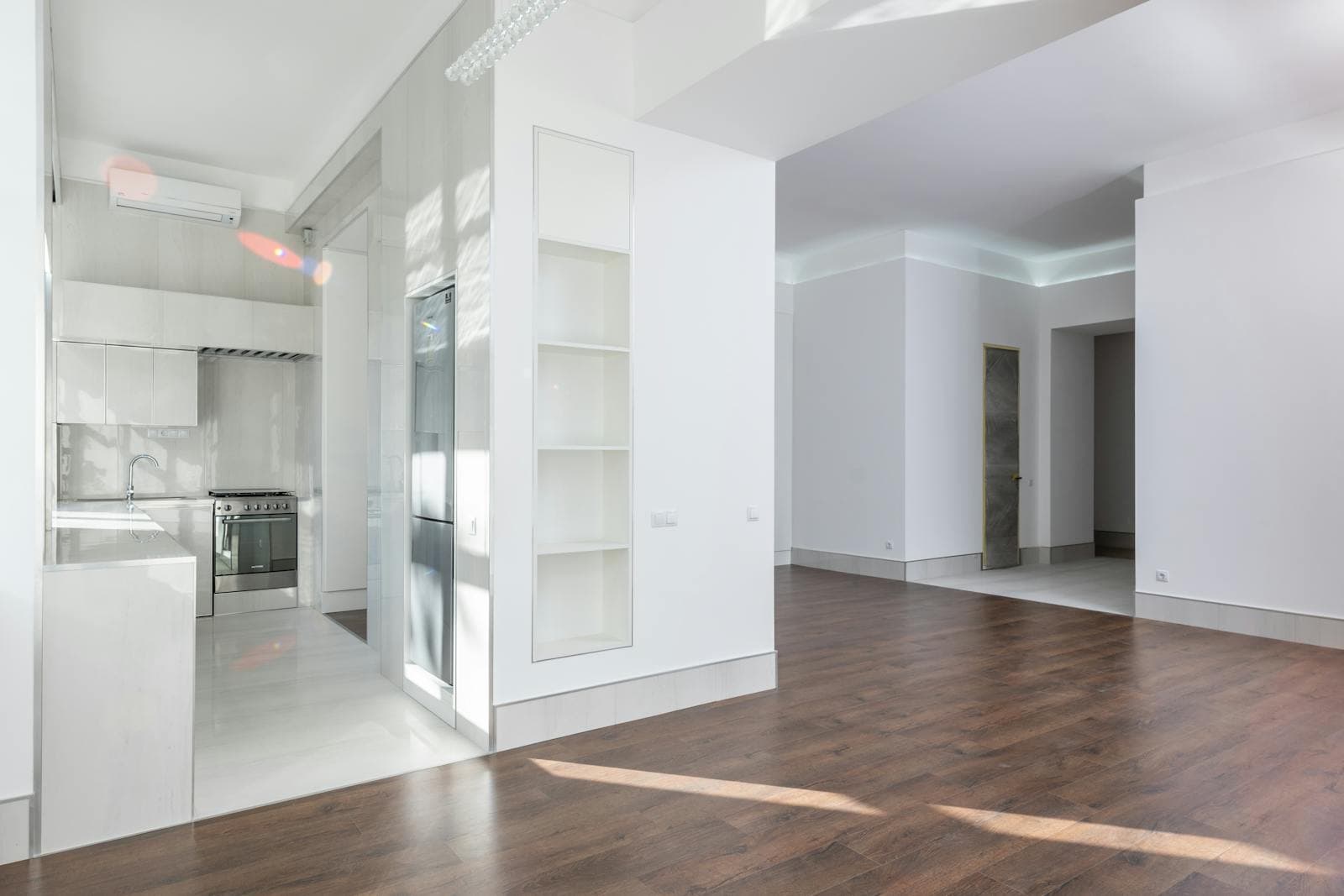
Move out repairs Sacramento sellers and tenants both face come down to the same six-line punch list -- paint touch-up, drywall patching, handyman fixes, deep clean, fixture repair, and exterior cleanup -- but the legal stakes and budget targets are completely different. Sellers spend $2,500 to $8,500 on pre-listing repairs because every visible defect costs them at the negotiating table. Tenants spend $200 to $1,500 on targeted fixes because California Civil Code Section 1950.5 caps what a landlord can deduct from the security deposit to damage beyond ordinary wear and tear. This guide walks the full Sacramento move-out repair checklist for both groups, with line-item costs, photo-documentation rules, the wear-and-tear definitions California courts actually apply, and the professional-versus-DIY decision points that decide whether a repair pays for itself.
Key Takeaways
- Seller budget: $2,500 to $8,500 typical for Sacramento pre-listing repairs; $8,000 to $20,000 in higher-priced neighborhoods
- Tenant budget: $200 to $1,500 for targeted fixes that protect the security deposit
- Legal anchor: California Civil Code 1950.5 caps tenant deductions to damage beyond ordinary wear and tear; deposits returned within 21 days
- Wear vs damage: small nail holes, faded paint, traffic-pattern carpet wear are not chargeable; large holes, pet stains, broken fixtures are
- Documentation: timestamped EXIF photos at move-in and move-out win deposit disputes consistently in California small-claims court
- Seller ROI: turnkey-condition Sacramento homes typically sell 6 to 12 days faster and for 2 to 4 percent more than comparable homes with visible defects (CAR 2026)
Move-out is a financial moment for everyone involved. For Sacramento sellers, every defect a buyer sees at showing translates into either a price reduction, a credit at closing, or a buyer who walks. For Sacramento tenants, every line item on a landlord's deduction list eats into a security deposit that California law caps at one month's rent (post-July 2024). The repair scope might overlap on paper, but the strategy and the legal framework couldn't be more different.
This guide separates the two paths and walks each one through the actual repair list, the cost ranges Sacramento contractors quote in 2026, the legal protections tenants are entitled to under California law, and the photo-documentation discipline that protects both groups when a dispute lands in front of a Realtor, an adjuster, or a small-claims judge.
Move-Out Repairs: The Seller Path vs The Tenant Path
Before pricing line items, frame the move-out correctly. A seller and a tenant have completely different objectives, budgets, legal limits, and timelines.
The Seller Objective: Maximize Sale Price
A Sacramento seller doing pre-listing repairs is investing money to make money. Every dollar spent on cosmetic improvements typically returns $1.50 to $4 at closing on a well-priced Sacramento home. The seller has no legal cap on repair scope -- only a budget ceiling and a timeline (usually 30 to 60 days before listing). For the full sequenced playbook, see our 60-day pre-listing prep timeline for Sacramento sellers.
The Tenant Objective: Protect the Security Deposit
A Sacramento tenant doing move-out repairs is investing money to keep money. Every dollar spent on a targeted fix avoids a deduction the landlord would otherwise charge against the deposit. California law sharply limits what the landlord may deduct, so tenants should focus on actual damage -- not generic refresh -- and document everything. Get this right and the full deposit comes back within 21 days of move-out under Civil Code 1950.5.
Pro Tip
If you're a Sacramento tenant unsure whether a repair is worth doing, ask one question: would the landlord legally be allowed to deduct this from my deposit? If the answer is no (because it's wear and tear), skip the repair. If the answer is yes (because it's damage you caused), either fix it yourself or expect the deduction. Don't repaint a whole apartment to "be nice" -- the landlord can't charge you for that anyway.
California Civil Code 1950.5: What Tenants Need to Know
California Civil Code Section 1950.5 is the single most important law for any Sacramento tenant moving out. It defines exactly what a landlord can and cannot charge against the security deposit, and it sets enforceable timelines.
Permitted Deductions
- Unpaid rent owed under the lease
- Cleaning to return the unit to the level of cleanliness at move-in (not a higher level)
- Repair of damage caused by the tenant or the tenant's guests beyond ordinary wear and tear
- Restoration or replacement of furnishings (only if the lease specifically authorizes it)
Prohibited Deductions
- Ordinary wear and tear (nail holes, traffic-pattern carpet wear, faded paint, minor scuffs)
- Pre-existing damage that was already there at move-in (which is why move-in photos matter)
- Routine repaint when the unit's paint has exceeded its useful life
- Replacement of fixtures or finishes that are merely outdated, not damaged
- "Administrative fees" or flat per-day cleaning charges not tied to actual labor and materials
The 21-Day Rule
Within 21 calendar days of the tenant vacating, the landlord must do all of the following:
- Return the unused portion of the security deposit
- Provide an itemized statement listing each deduction
- Include copies of receipts or invoices for any charge of $125 or more
- Mail or hand-deliver the documents to the tenant's forwarding address
A landlord who fails to follow these steps can be liable for the full deposit plus up to twice the deposit amount in statutory damages if the failure was in bad faith. The full statute is at the California Legislative Information site, and the California Department of Real Estate publishes a plain-language tenant guide at the DRE Landlord-Tenant Booklet.
The 2024 Deposit Cap
As of July 1, 2024, California AB 12 limits security deposits to one month's rent for most residential tenancies, regardless of whether the unit is furnished or unfurnished. Small landlords (those who own no more than two residential properties with no more than four total units) may still collect up to two months' rent. This means the maximum a typical Sacramento tenant has at risk is roughly $1,950 (current 2026 median 2-bedroom rent per the RentCafe Sacramento report) -- which is exactly why protecting that deposit through targeted repairs and clean photo documentation matters.
Wear and Tear vs Damage: What's Chargeable in California
Source: California Civil Code Section 1950.5 and California Department of Real Estate Landlord-Tenant guidance.
The Sacramento Tenant Move-Out Repair Checklist
For a tenant, the smart move-out repair scope targets only the items a landlord could legally charge against your deposit. Skip the rest. Here are the line items most Sacramento tenants need to handle, with realistic DIY versus pro pricing.
Drywall and Wall Repairs
Small nail holes (1/8 inch or less from picture hangers) are wear and tear -- do not patch them. Larger holes (anchor holes, doorknob impacts, anything you'd notice from across the room) are damage and need patching. A typical 2-bedroom Sacramento rental has 0 to 5 patch-worthy holes after a 1-to-3 year tenancy.
- DIY: $15 to $35 in spackle, sandpaper, and matching paint; 1 to 2 hours per hole including dry time
- Pro: $150 to $400 for 3 to 8 patches with sand, prime, and paint; full cost guide in our Sacramento drywall repair cost breakdown
Paint Touch-Up (When You Have the Original)
If the landlord left a labeled paint can in the garage or storage closet, touch-up is fast and cheap. Without matched paint, do not attempt full-wall repaint -- the patches will flash visibly and look worse than the original damage. In that case, leave the wall and let the landlord handle it; if it's wear and tear, they cannot charge you anyway.
Cleaning to Move-In Standard
The landlord can charge you to bring the unit back to the level of cleanliness it was at move-in -- not a higher level. Most Sacramento tenants spend a long weekend on a thorough clean covering:
- All appliance interiors (oven, fridge, microwave, dishwasher, range hood filter)
- Inside cabinets and drawers, including under-sink areas
- Bathrooms: toilet, tub, shower, tile, grout, mirror, vanity
- Floors: vacuum, mop, baseboards, corners
- Windows interior, blind slats, window tracks, sills
- Light fixtures, ceiling fans, vent covers, door tops
A professional move-out clean for a 2-bed Sacramento apartment runs $250 to $450, which is almost always cheaper than the landlord's cleaning charge if you skip this step.
Fixture and Hardware Repairs
- Replace any blinds you broke or removed ($25 to $80 per window for standard pleated blinds)
- Replace torn screens ($15 to $40 each, or $80 to $150 if a pro restretches them)
- Reattach loose towel bars, shower rods, or curtain rods you anchored incorrectly
- Replace burned-out bulbs to match what was there at move-in
- Replace any broken outlet covers or switch plates ($1 to $4 each at any hardware store)
Pet and Smoke Damage
If you had a pet on the lease, pet damage is the biggest single deposit risk. Carpet odor saturation can cost $1,500 to $4,000 to remediate -- often more than the deposit itself. Address it before move-out: professional carpet clean with enzymatic odor treatment, plus pet-stain primer on subfloor if the pad was saturated. Same for smoke or marijuana saturation: ozone treatment, stain-blocking primer on walls, and a thorough clean. A $400 professional intervention often prevents a $1,500 charge.
Targeted Tenant Repair Cost Examples
| Move-Out Item | DIY Cost | Pro Cost | Likely Deduction if Skipped |
|---|---|---|---|
| 3-5 drywall patches with paint match | $25 - $50 | $150 - $400 | $300 - $600 |
| Move-out deep clean (2-bed apt) | $30 supplies | $250 - $450 | $400 - $700 |
| Replace 2 broken blinds | $50 - $120 | $120 - $200 | $150 - $300 |
| Carpet pet-odor treatment | $80 - $150 | $300 - $600 | $1,500 - $4,000 |
| Replace torn window screens (3) | $45 - $90 | $240 - $400 | $300 - $500 |
| Total typical 2-bed scope | $230 - $440 | $1,060 - $2,050 | $2,650 - $6,100 |
The math almost always favors handling repairs yourself or hiring a pro: even at full pro pricing, the cost is roughly half what the landlord would charge against the deposit. A coordinated visit from a multi-service handyman covering patches, blinds, hardware, and a deep clean is the cleanest single-day fix. Our Sacramento handyman services guide covers what these visits typically include and what they cost.
The Sacramento Seller Move-Out Repair Checklist
For a Sacramento seller, the move-out repair scope is broader and more strategic. The goal is not to "pass" a landlord inspection -- it's to present the home in the best possible condition for the buyer pool, the inspection report, and the appraisal.
The Six-Trade Pre-Listing Scope
Most Sacramento sellers run a six-trade pre-listing scope in the 30 to 60 days before MLS:
- Interior paint refresh. Full repaint or aggressive touch-up of high-traffic walls, doors, and trim. Color choice matters: see our best paint colors to sell a house in Sacramento for the colors data shows perform best at resale.
- Drywall and trim patching. Every nail hole, anchor hole, and ding patched, sanded, primed, and painted. Trim and baseboards re-caulked where separated.
- Handyman punch list. Typically 12 to 25 items: door adjustments, sticky drawers, loose fixtures, replaced outlet covers, HVAC filter, smoke detector batteries, broken bulbs, hardware tightening.
- Deep clean. Whole-house deep clean including appliance interiors, inside cabinets, baseboards, vents, and a final dust pass before staging.
- Curb appeal. Pressure wash exterior, gutter cleaning, lawn refresh, mulch beds, address numbers, front door touch-up. Our Sacramento curb appeal guide covers the highest-ROI exterior moves.
- Inspection-flagged items. If you've done a pre-listing inspection (recommended in Sacramento), address the inspector's safety items: smoke detector placement, water heater strapping, GFCI outlets in wet locations, handrail heights, anything that will appear on the buyer's inspection report.
Sacramento Seller Repair Budget by Home Tier
| Home Tier | Typical Sale Price | Repair Budget | Expected ROI Range |
|---|---|---|---|
| Entry-level Sacramento home | $350K - $475K | $2,500 - $5,000 | $6,000 - $14,000 |
| Mid-tier (Citrus Heights, North Highlands, Arden) | $475K - $625K | $4,500 - $8,500 | $12,000 - $25,000 |
| Established Sacramento (Pocket, Tahoe Park, Carmichael) | $600K - $850K | $6,500 - $12,000 | $18,000 - $35,000 |
| Premium (East Sac, Land Park, Curtis Park, Sierra Oaks) | $850K - $1.6M | $10,000 - $22,000 | $30,000 - $70,000 |
| Luxury (East Sac craftsman, river-front, Granite Bay) | $1.6M+ | $18,000 - $45,000 | $50,000 - $140,000 |
ROI ranges are based on 2026 California Association of Realtors data showing turnkey-condition homes sell 6 to 12 days faster and for 2 to 4 percent more than comparable homes with visible defects, plus reduced post-inspection credit demands. The full sequenced timeline lives in our what to fix before selling a house in Sacramento guide.
Seller Repair ROI: Spend vs Return at Close
Source: California Association of Realtors 2026 Sacramento market data; mid-range estimates of ROI from pre-listing repair scopes. Actual results vary by home condition, market timing, and repair selection.
Photo Documentation: The Single Most Important Step
For both sellers and tenants, photo documentation is the highest-leverage hour of the entire move-out process. A complete photo record costs nothing and resolves disputes that would otherwise eat thousands of dollars.
Tenant Photo Documentation Protocol
- Photograph every wall in every room, including corners and ceiling junctions
- Photograph every floor surface, including under furniture if you can move it
- Photograph every appliance interior (oven racks, fridge shelves, dishwasher tub, microwave)
- Photograph inside every cabinet and drawer
- Photograph every fixture: faucets, showerheads, light fixtures, ceiling fans
- Photograph the front and back exterior including fences, decks, and landscaping you maintained
- Take wide shots and detail shots -- a wide shot proves the room state, a detail shot proves a specific item's condition
- Use a smartphone (iPhone, Pixel, or modern Android) so EXIF metadata captures date, time, and GPS coordinates automatically
- Email yourself the full set so you have a timestamped, server-stored record
Seller Photo Documentation Protocol
- Photograph every defect before repairs begin so you have a clear before-and-after record
- Save invoices from every contractor, labeled by date and scope
- For permitted work, file the permit and any inspection sign-offs with the home's records (matters for buyer due diligence and the appraiser)
- Document the staging condition with high-quality shots before listing photos are taken professionally
- Keep a running list of repairs completed for buyer disclosure (California TDS form requires honest condition disclosure under DRE consumer guidelines)
Pro Tip
For tenants, the highest-impact 30 minutes you spend on move-out is walking the unit with your phone in video mode and narrating every room. Time-stamped video with audio narration ("kitchen, walls in good condition, no nail holes other than where the previous fixture hung") is overwhelming evidence in any deposit dispute. Sacramento small-claims judges routinely cite this kind of documentation in tenant-favorable rulings.
Professional vs DIY: The Decision Framework
When does a Sacramento move-out repair belong with a pro versus a DIY weekend? The decision usually comes down to four factors: skill required, tools required, time pressure, and the stakes of getting it wrong.
DIY Makes Sense When:
- The damage is cosmetic and small (a few nail holes, minor scuffs, a single broken blind)
- You have basic tools (screwdriver set, putty knife, sandpaper, caulk gun) and a free weekend
- You have access to matching paint or hardware
- You're a tenant facing a deposit deduction smaller than the cost of hiring a pro
Hire a Pro When:
- You're a seller and the home is going on MLS in 30 to 60 days -- the repairs need to be invisible and pro-quality
- The damage exceeds 5 to 8 line items (volume tips the math toward pro labor every time)
- The repair touches anything safety-related: electrical, gas, structural, water, or roof
- You have pet or smoke saturation that requires specialized cleaning and primer products
- You need permitted work or a contractor signoff for inspection records
- The total tenant deduction risk is $500+ and a pro visit costs less than the likely deduction
Our DIY vs pro home repairs in Sacramento guide walks the broader decision framework with line-item examples for paint, gutters, drywall, and handyman work.
The 30-Day Move-Out Repair Sequence
Whether you're a seller or a tenant, the repair work flows in roughly the same order. Front-load the noisy, dusty, and disruptive work; finish with the clean and detail work. A typical 30-day Sacramento move-out timeline:
- Day 1 to 3 -- Walk-through and photo documentation. Walk the unit with a tablet or notebook. List every defect. Take comprehensive photos. Build the line-item repair list.
- Day 4 to 7 -- Estimates and scheduling. Get one or two estimates if hiring a pro. Lock the contractor on the calendar 14 to 21 days out. Order any specialty parts (matching blinds, hardware, paint).
- Day 8 to 14 -- Drywall, patching, and prep. All wall and trim repairs done first. Sand, prime, and let dry fully before next phase.
- Day 15 to 18 -- Paint touch-up or refresh. Match-paint touch-ups or full repaint depending on scope. Allow 24 to 48 hours for full cure before next steps.
- Day 19 to 22 -- Handyman punch list. Hardware, fixtures, blinds, screens, lights, smoke detectors, HVAC filters, all the small items together.
- Day 23 to 26 -- Deep clean and exterior. Full interior deep clean, window wash, and exterior pressure wash or curb appeal work. For sellers, schedule listing photos for day 26 or 27.
- Day 27 to 30 -- Final walk-through and documentation. Full re-inspection, final photos, invoice and receipt collection, key handoff (tenants) or staging (sellers).
A Sacramento Move-Out Story: The $1,800 Documentation Save
A renter in Tahoe Park lived in a 2-bedroom apartment for four years before relocating in March 2026. At move-in, she photographed every room and emailed the set to herself with the subject line "move-in condition photos." At move-out, she repeated the process. The unit was clean, with normal wear: minor scuffs, nail holes from picture hangers, faded paint near the south-facing windows, and traffic-pattern carpet wear in the hallway.
The landlord returned the deposit minus $1,800 in deductions: $900 for "full repaint required," $400 for "carpet replacement," $300 for "wall damage," and $200 for "deep cleaning." The tenant filed in Sacramento County small-claims court with her photo set, EXIF metadata, and a copy of Civil Code 1950.5 highlighted on the relevant subsections. The judge ruled the entire $1,800 deduction unlawful: the paint was 6 years old (past useful life), the carpet wear was traffic-pattern wear and tear, the "wall damage" was small nail holes documented at move-in, and the "deep cleaning" was not supported by an itemized invoice. The tenant got the full $1,800 plus statutory damages of $1,200 for the bad-faith deduction, totaling $3,000 plus the original deposit.
The whole win came down to one hour of move-in photos four years earlier. That's the leverage of documentation in California tenant law.
Working With a Multi-Service Contractor for Move-Out Repairs
When the move-out scope crosses three or more trades -- drywall, paint, handyman, cleaning -- coordinating one multi-service contractor saves time, money, and scheduling friction compared to chasing four separate vendors. This is true whether you're a seller running a 60-day pre-listing scope or a landlord scheduling a turnover.
The advantages are the same as on any bundled scope:
- One walk-through builds the full scope across every trade
- Crews layer in the right order so paint dust doesn't recontaminate clean surfaces and caulk doesn't get smashed by a handyman re-anchoring blinds
- One invoice, one warranty, one accountable party if anything fails post-repair
- Typical bundled savings of 15 to 25 percent versus separate vendors on a 4-trade scope
- Full cycle in 5 to 10 days instead of 25 to 40 calendar days with separate vendors
Our deep dive on why bundling paint, gutters, handyman, and remodeling saves time and money in Sacramento walks the math at full scale, and the Sacramento rental turnover package guide covers the rental-specific version of the same playbook.
What Sacramento Sellers and Tenants Should Skip
Both groups overspend on items that don't move the needle. A short list of move-out repairs that almost always waste money:
- Sellers: Major kitchen or bathroom remodels right before listing -- the ROI rarely beats an aggressive paint refresh and curb appeal pass. See our Sacramento kitchen remodel cost guide and bathroom remodel cost guide for what these scopes actually cost when done right.
- Sellers: Unpermitted work performed under listing pressure -- always disclosable, sometimes a deal-killer. If you need a permit, see Sacramento building permits: what needs one.
- Tenants: Full repaint of the unit -- the landlord can almost never legally charge you for routine repaint, so doing it yourself is a gift to the landlord.
- Tenants: Carpet replacement -- almost always wear and tear, not chargeable beyond pro-rated useful life.
- Tenants: Repairs that cost more than the deduction risk -- if a deduction would be $200 and a pro repair is $400, take the deduction.
- Both: Anything cosmetic that the buyer or new tenant will likely change in the first 6 months anyway (custom paint colors, niche fixtures).
What to Do With Inspection-Flagged Items
For Sacramento sellers, the buyer's inspection report is where the second round of repairs lives. Common items that show up on Sacramento inspection reports and matter at the negotiating table:
- GFCI outlets missing in kitchens, bathrooms, and exterior locations
- Smoke and CO detectors missing or expired (per California requirement)
- Water heater seismic strapping (required statewide, frequently missed on older Sacramento homes)
- Handrails missing on staircases of three or more risers
- Sub-grade exterior drainage carrying water toward the foundation -- see our French drain cost in Sacramento guide
- Roof age and condition (Sacramento composition roofs typically need replacement at 18 to 22 years)
- HVAC age and last service date
- Original windows or windows with broken seals -- common on East Sac and Land Park homes
Addressing the common safety items pre-listing eliminates the most-cited inspection issues before the buyer's inspector ever shows up. That alone removes $1,500 to $4,000 of typical post-inspection credit demands and keeps the deal moving on the original price.
Where the Move-Out Repair Budget Actually Goes
Mid-range Sacramento estimates for a 2-bed apartment (tenant) and a 1,400-1,800 sf single-family home (seller). Actual totals scale with home size, condition, and scope.
Quick Reference: The Combined Sacramento Move-Out Repair Checklist
The full punch list that covers both seller and tenant paths -- skip the items that don't apply to your situation.
- Walk the unit and document every defect with timestamped photos
- Compare condition against your move-in record (tenants) or pre-listing inspection (sellers)
- Sort items into wear-and-tear (skip if tenant) versus damage or pre-listing scope
- Patch all drywall holes and dings, sand, prime, and paint-match
- Touch up or repaint walls, trim, and doors as needed
- Run the handyman punch list: hardware, fixtures, blinds, screens, lights, smoke detectors, HVAC filter, caulk refresh
- Address pet, smoke, or marijuana saturation with proper primers and treatments
- Replace any broken or missing items: blinds, screens, outlet covers, batteries
- Deep clean: appliances, cabinets, bathrooms, floors, windows, vents, baseboards
- Exterior pressure wash, gutter clean, lawn refresh (sellers and SFR tenants)
- Address any inspection-flagged safety items (sellers): GFCIs, water heater strap, smoke detectors, handrails
- Final walk-through with photo documentation matching the pre-repair set
- Collect all invoices, receipts, and contractor warranties; keep with home or move-out records
- Confirm key handoff process and forwarding address (tenants) or staging schedule (sellers)
Across a typical Sacramento 2-bed apartment tenant scope or a 1,400 to 1,800 square foot single-family seller scope, this list covers 95 percent of the move-out repair work that actually matters. Items not on the list are usually wear-and-tear (tenants) or low-ROI cosmetic work (sellers) that doesn't pay back.
Get Your Sacramento Move-Out Repairs Scoped
ProFlow Home Services runs bundled move-out repair packages across Sacramento, Roseville, Rocklin, Citrus Heights, Carmichael, Folsom, Elk Grove, Rancho Cordova, Granite Bay, Lincoln, Loomis, and Fair Oaks. Whether you're a seller staging a home for a 30-day listing window or a tenant scoping a deposit-protection repair pass, we coordinate paint, drywall, handyman, deep clean, and exterior work under one walk-through, one contract, and one timeline.
For sellers, our pre-listing scope includes a photo-documented before-and-after record so your agent can present the home with confidence at MLS. For tenants, we deliver an invoice with a clear scope description that supports any deposit-related conversation with your landlord. We bundle interior painting, handyman services, pressure washing, and gutter cleaning into single-contract scopes priced by line item.
Request a move-out repair estimate and we'll walk the home, build the scope, and deliver a line-item quote with a day-by-day timeline that lines up with your listing date or your lease-end date.