Exterior painting in Loomis encompasses far more than typical suburban home painting. Rural properties feature diverse architectural styles from classic farmhouses to contemporary designs, often including barns, workshops, and outbuildings that require coordinated color schemes and professional expertise. Understanding Loomis' unique character and foothill climate ensures exterior painting projects that enhance both beauty and property value.
Loomis Architectural Diversity
Unlike master-planned suburban communities with similar home styles, Loomis properties reflect decades of rural development and individual owner preferences. This creates fascinating architectural variety throughout the Loomis Basin, Del Oro, Taylor Road, and Horseshoe Bar areas.
Classic California Farmhouses
Traditional farmhouses dot Loomis, many dating to the region's agricultural heritage. These homes feature board-and-batten siding, covered porches, steep-pitched roofs, and functional designs that prioritized durability over decoration. Painting these structures requires respecting their historical character while updating colors for contemporary appeal.
Classic farmhouse colors include crisp whites, warm creams, soft grays, and barn reds. Many homeowners choose white or cream main bodies with contrasting trim in darker grays, deep greens, or classic black. These traditional palettes honor the home's heritage while reading as fresh and well-maintained.
Modern Farmhouse Style
Loomis has seen significant modern farmhouse construction over the past 15 years. These homes blend traditional farmhouse elements—board-and-batten accents, metal roofs, covered porches—with contemporary design and finishes. The modern farmhouse aesthetic dominates new construction throughout the area, particularly in Del Oro and newer Taylor Road developments.
Modern farmhouse painting typically features high-contrast schemes: white or light gray siding with charcoal, black, or dark gray trim. Board-and-batten accents might appear in contrasting colors, and metal roofs in dark bronze or charcoal complete the look. These crisp, sophisticated color schemes require excellent surface preparation and application technique—flaws show prominently in high-contrast finishes.
Ranch and Traditional Styles
Single-story ranch homes and traditional two-story designs comprise much of Loomis' residential character. These homes often feature horizontal siding, brick or stone accents, and more subdued architectural expression than farmhouse styles. Paint selection for these properties emphasizes colors that complement natural stone or brick elements while refreshing the overall appearance.
Warm neutrals, soft greiges (gray-beige blends), and earth tones work particularly well on ranch and traditional homes in Loomis. These colors harmonize with the foothill landscape visible from most properties while providing sophisticated, timeless appeal.
Color Selection for the Loomis Landscape
The foothill environment influences exterior color selection in ways that differ from valley communities:
Complementing Natural Surroundings
Loomis properties enjoy views of oak-studded hills, golden grasslands, and distant Sierra peaks. Exterior colors should complement rather than compete with this natural beauty. Earth tones, greiges, sage greens, and colors pulled from the landscape create homes that feel integrated with their environment.
Properties with significant oak tree coverage—common throughout the Loomis Basin—look particularly good in colors that echo oak bark and foliage: warm grays, soft greiges, and muted greens. These tones recede visually, allowing the natural landscape to take precedence while maintaining sophisticated home appearance.
Addressing Intense Foothill Sun
Loomis sits at higher elevation than Sacramento Valley communities, receiving more intense sunlight with less atmospheric filtering. This affects how colors appear and how quickly paint degrades. Darker colors absorb more heat and fade faster, while lighter colors reflect sun and maintain their appearance longer.
For homes with significant south or west-facing exposure—common in Loomis where properties are oriented to maximize valley views—lighter paint colors resist fading and reduce cooling costs by reflecting solar heat. If you prefer darker colors, use them on north or east-facing elevations and shaded areas where they'll last longer.
Creating Visual Cohesion Across Multiple Buildings
Unlike suburban lots with single structures, Loomis properties typically include main homes plus barns, workshops, storage buildings, and other outbuildings. Creating visual harmony across these structures requires thoughtful color planning.
Common approaches include using the same color palette across all buildings with variations in tone—for example, a white house with gray trim paired with a gray barn with white trim. Alternatively, some properties distinguish residential and agricultural buildings with different but complementary color schemes: a sage green house with cream trim combined with a classic barn red outbuilding with white trim.
Loomis Color Pro Tip
Drive through established Loomis neighborhoods before finalizing color choices. Observe which colors look best on homes similar to yours and which schemes age well in the foothill climate. Properties along Taylor Road and in the Loomis Basin offer excellent examples of successful color selection for different architectural styles.
Timing Exterior Painting in Loomis
Loomis' foothill climate creates specific windows for successful exterior painting:
Ideal Spring Season (April-May)
Late spring provides optimal conditions for Loomis exterior painting. Rainy season has ended, temperatures moderate between 65-85°F, and humidity remains low. These conditions allow paint to cure properly without excessive heat stress or moisture interference.
Spring painting also provides maximum time before the next rainy season, allowing paint to fully cure (4-6 weeks) and develop complete moisture resistance before winter weather returns. This timing particularly matters for Loomis' exposed foothill properties that face wind-driven rain.
Fall Painting Window (September-October)
Early fall offers another excellent painting season. Summer heat has moderated, but rain typically holds off until late November or December. Temperatures remain ideal for paint application and curing, while lower angle sun creates comfortable working conditions.
Fall painting requires careful weather monitoring—unexpected early rain can ruin fresh paint. Quality contractors track forecasts closely and avoid scheduling painting when weather patterns suggest moisture risk within the critical 48-hour curing window.
Summer Challenges (June-August)
Loomis summer temperatures frequently exceed 95-100°F, creating difficult painting conditions. Intense heat causes paint to dry too quickly, preventing proper leveling and adhesion. Direct sun on fresh paint can cause blistering, while surfaces become too hot to touch safely.
Professional painters can work around summer heat by painting shaded elevations during hot afternoons and following the shade around homes. However, comprehensive whole-house painting works better in spring or fall when temperature extremes don't compromise quality or create safety concerns.
Winter Limitations (November-March)
Loomis winters bring rain, occasional freezing temperatures, and high humidity that prevent successful painting. Most quality paints require temperatures above 50°F during application and for 48 hours afterward. Winter conditions rarely provide reliable weather windows meeting these requirements.
Surface Preparation: The Foundation of Quality
Preparation determines exterior painting success more than any other factor. Loomis properties require thorough prep addressing climate-specific challenges:
Pressure Washing
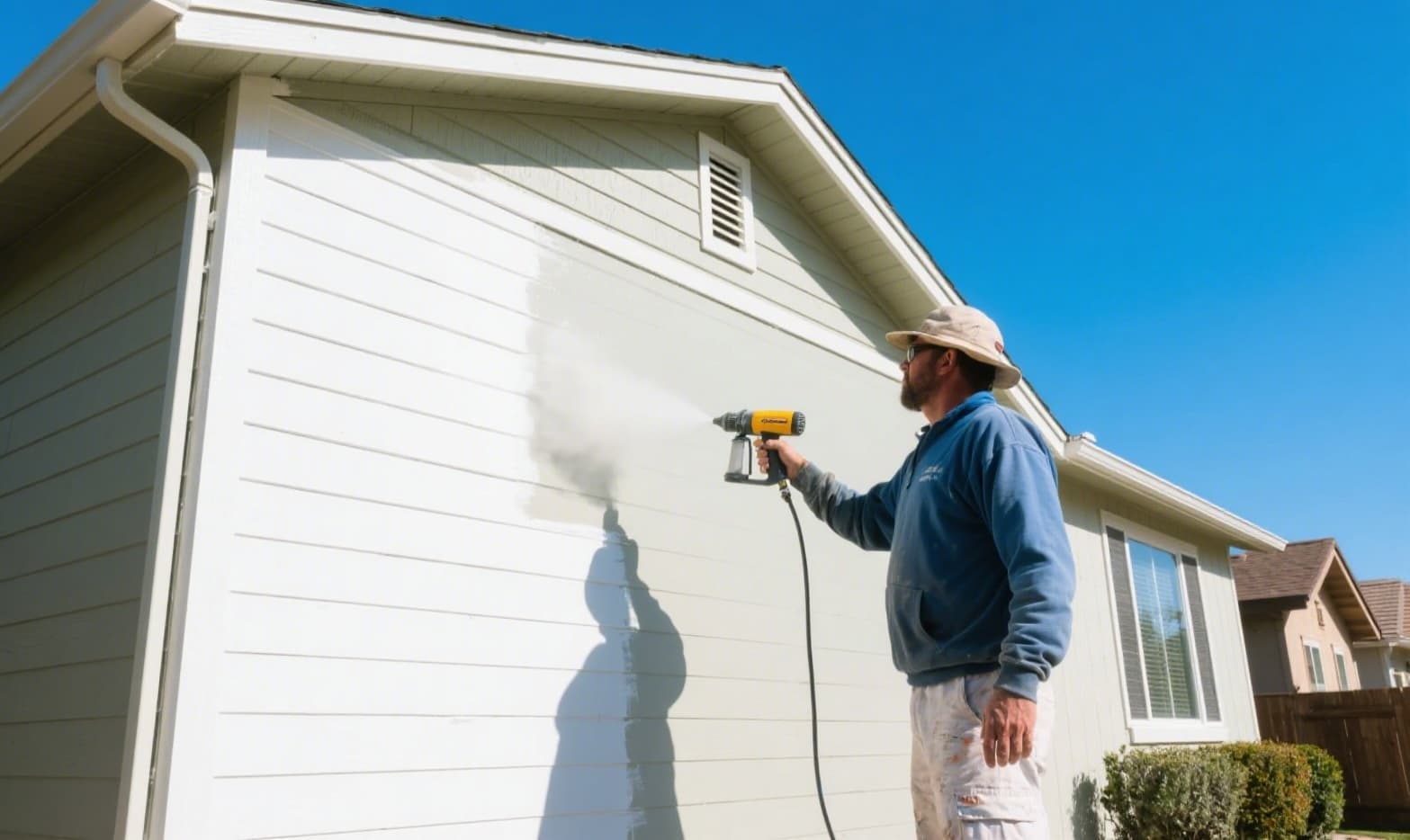
All exterior surfaces need pressure washing before painting to remove Loomis' characteristic red dust, pollen, organic growth, and oxidized paint residue. This cleaning creates the clean surface essential for proper paint adhesion. Areas under eaves and on north-facing elevations often host moss or mildew that requires treatment with specialized cleaning solutions before painting.
Scraping and Sanding
Older Loomis homes often show paint failure: peeling, cracking, and blistering caused by moisture intrusion, poor original preparation, or age. All failing paint must be scraped away, edges feathered smooth, and bare wood sanded before priming. Skipping this labor-intensive step ensures new paint will fail within 1-2 years as it loses adhesion to unstable underlying layers.
Wood Repair and Replacement
Foothill climate extremes—summer heat exceeding 100°F and winter freezes—accelerate wood deterioration. Careful inspection identifies rotted siding, fascia, trim, and window components requiring repair or replacement before painting. Painting over damaged wood wastes money and hides problems that will worsen.
Properties with original wood siding from the 1970s-1990s often need significant repair work. Budget-conscious approaches might paint over minor damage, but quality work addresses all structural concerns before painting begins.
Caulking and Sealing
Comprehensive caulking creates weathertight seals around windows, doors, trim joints, and siding seams. This step prevents moisture intrusion that causes paint failure and wood rot while improving energy efficiency. Loomis' wide temperature swings cause building materials to expand and contract significantly, opening gaps that require flexible, high-quality caulking for lasting seals.
Priming
All bare wood, repairs, and stain-prone areas require quality primer before finish coats. Modern primers seal wood tannins that cause staining, improve adhesion, and ensure uniform appearance of finish coats. For Loomis properties with redwood or cedar siding—common in older homes—oil-based primers prevent tannin bleed-through that ruins water-based finish coats.
Professional Loomis Exterior Painting
Transform your Loomis property with professional exterior painting that respects your home's character while delivering lasting beauty. From farmhouse to modern, single home to entire property, we provide expertise that protects your investment.
Get Your Free Loomis EstimatePaint Selection for Loomis Durability
Foothill climate demands premium paint products engineered for extreme conditions:
Top-Tier Product Lines
For Loomis exteriors, invest in premium paints from Sherwin Williams (Duration or Emerald), Benjamin Moore (Aura or Regal Select), or Dunn-Edwards (Sparta or Evershield). These products cost $60-80 per gallon versus $30-40 for mid-grade paints, but deliver significantly better performance in challenging climates.
Premium paints include advanced resins that flex with temperature changes, superior UV resistance that prevents fading, enhanced mildew resistance for shaded areas, and better adhesion that prevents peeling. For a typical Loomis home, premium paint adds $800-1,200 to material costs—minor compared to total project investment and dramatically extended longevity.
Sheen Selection
Different exterior surfaces benefit from different paint sheens:
- Flat/Matte: Best for hiding imperfections on older siding or stucco. Least durable but most forgiving appearance. Consider for older Loomis farmhouses where perfect smoothness isn't achievable.
- Satin/Low-Luster: Ideal for most Loomis siding applications. Provides subtle sheen that's easier to clean than flat while still hiding minor imperfections. Most popular choice for residential exteriors.
- Semi-Gloss: Essential for trim, doors, and accent areas. Highly durable and cleanable, making it perfect for high-contact areas. Also appropriate for modern farmhouse board-and-batten accents where slight sheen adds visual interest.
- Gloss: Rarely used in residential applications except for front doors or decorative elements where high shine creates accent points.
Color Fade Resistance
Loomis' intense sun causes significant paint fading over time. Lighter colors show less fading than darker tones—white, cream, and light gray maintain appearance for 12-15 years while deep reds, blues, and dark grays show noticeable fading in 5-7 years.
If choosing darker colors, use premium paints with maximum UV resistance and accept that touch-up or repainting will be necessary sooner than with lighter schemes. Many Loomis homeowners reserve darker colors for accent areas that can be repainted without comprehensive whole-house work.
Painting Barns and Outbuildings
Agricultural buildings require different approaches than residential structures:
Traditional Barn Red
Classic barn red remains popular throughout Loomis, honoring the region's agricultural heritage while providing durable, attractive finishes. Originally formulated with iron oxide (rust), modern barn red paints deliver the traditional color with contemporary performance.
Barn red works particularly well on older agricultural buildings where historical character matters. The deep color hides dirt and weathering well, making it practical for working structures that see daily use.
Coordinated Color Schemes
Modern Loomis properties increasingly coordinate barn and outbuilding colors with main homes. This creates visual harmony across properties while maintaining distinction between residential and agricultural spaces. Common approaches include painting barns in darker tones from the home's palette or using the home's trim color as the barn's main color.
Simplified Finishes
Working agricultural buildings don't need the extensive prep and multi-coat finish appropriate for homes. Single-coat barn and fence paints provide adequate protection and appearance for utilitarian structures at lower cost. Focus investment on highly visible buildings near main homes and roads while using economical approaches for remote outbuildings.
DIY vs. Professional Exterior Painting
Loomis properties present challenges that often exceed practical DIY capabilities:
Height and Access
Many Loomis homes feature high gables, dormers, and multi-story sections requiring scaffolding or 40-foot extension ladders for safe access. Professional painting contractors carry insurance covering fall accidents and own specialized equipment for safe high-work access. Homeowner fall injuries during painting cause thousands of emergency room visits annually.
Time Requirements
Comprehensive exterior painting of a typical Loomis home including outbuildings requires 7-14 days of full-time work for professional crews. DIY projects typically extend over 6-12 weeks of weekend work, creating extended construction disruption while risking weather damage to partially completed work.
Quality and Durability
Professional painters achieve smooth, consistent finishes that last 12-15 years. Common DIY issues include visible brush marks, drips, uneven coverage, poor cut lines, and inadequate surface prep that causes premature failure. Given the investment in premium paint materials ($2,000-4,000 for a typical home), professional application makes sense to ensure those materials perform as designed.
Maintaining Painted Exteriors
Simple ongoing maintenance extends paint life significantly:
- Annual washing: Pressure wash or hand-wash painted surfaces yearly to remove dust, pollen, and organic growth before they bond permanently or cause deterioration.
- Vegetation control: Keep plants and tree branches trimmed 12-18 inches from painted surfaces to prevent moisture trapping and abrasion damage.
- Quick repairs: Address small paint chips and damage immediately to prevent moisture intrusion and expanding problems.
- Gutter maintenance: Keep gutters clean and functional to prevent overflow staining and moisture damage to siding and trim.
- Caulk inspection: Check caulking annually and renew any failing seals to prevent water intrusion.
Investment Value
Professional exterior painting ranks among the highest-ROI home improvements for Loomis properties:
Resale Impact
Fresh exterior paint typically returns 50-75% of cost at resale while dramatically reducing time on market. Loomis buyers specifically seeking rural properties have high expectations for property maintenance—faded, peeling paint signals deferred maintenance that reduces offers and extends selling time.
Property Protection
Beyond aesthetics, exterior paint protects wood siding, trim, and structural components from weather damage. This protection prevents wood rot, pest intrusion, and moisture damage that cost tens of thousands to repair. Regular painting maintenance costs less than addressing failure consequences.
Pride of Ownership
Well-maintained Loomis properties provide daily satisfaction while reflecting the investment and care you bring to your rural lifestyle. Whether you're enjoying morning coffee on a freshly painted porch or returning home down your tree-lined driveway to a beautifully maintained property, professional painting enhances your Loomis living experience.